

Spring is here!
Despite the chilly wind and the frosty nights, spring is officially here! Daffodils are starting to unfurl on the roadside verges, celandine are lifting their bright yellow faces to the sun and tree buds are starting to burst into life!
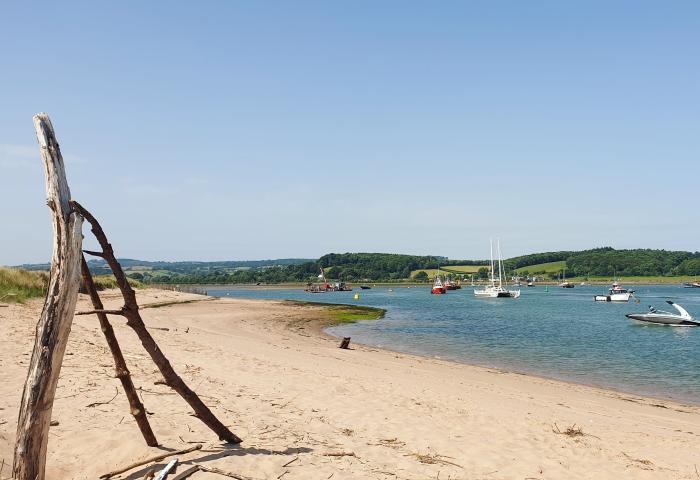
If you take time to look around you may spot jackdaws carrying sticks to their nests, male blackbirds looking especially smart with black plumage and bright yellow beak and ring round the eye and pairs of birds showing off to each other with aerial displays, beautiful songs and courtship feeding.
All this much more obvious bird activity heralds the start of the bird breeding season, which runs from 1st March to 31st July, From here onwards, certain activities – such as trimming or cutting trees, bushes, hedges and rough vegetation – are now restricted where birds are nesting, so that active bird nests aren’t damaged or destroyed, and specific bird species, such as Nightjar and Dartford warbler, aren’t disturbed.
Birds to look out for…
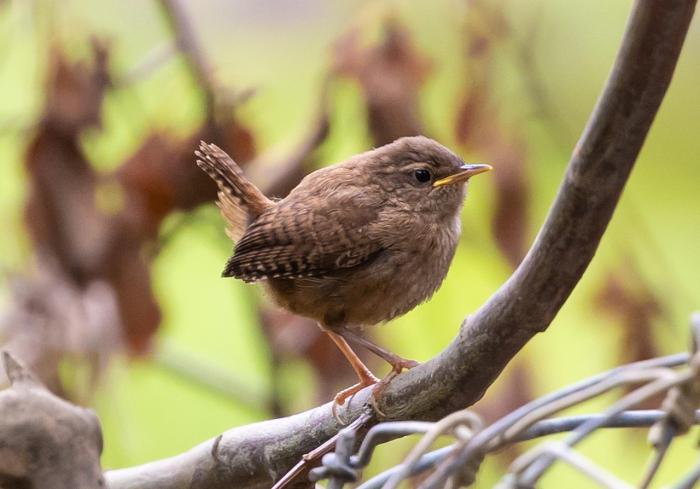
In early spring, the male Wren attracts a female by building a series of nests in his territory, the female is more attracted to a male who can build multiple nests. She inspects each one and then lines the chosen nest with feathers to make it cosy ready for the chicks. Wrens are present all over the UK, however due to the diminutive size and habit of hopping around in the undergrowth, they are often not seen. However, their loud call gives them away, using an app like Merlin can help you identify them.
Up on the Pebblebed Heaths, several of our protected bird species take a much more relaxed approach to nest building. Both Dartford Warblers and Nightjar nest on the ground (heathland typically does not support many trees), with Nightjar in particular, creating ‘scrapes’ – an area from which they remove debris to expose bare ground – rather than constructing the more typical nest that we imagine chicks cheeping from.
Nightjar rely on the cryptic camouflage of their eggs and young to keep them hidden amongst the gorse and heather. Once much more widely distributed than is the case now, Nightjar have declined along with their preferred habitat of lowland heath. On the Pebblebed Heaths, there are around 80 territories of this RSPB Amber List species. Listen out for them from May when they return from their wintering grounds in sub-Saharan Africa to breed here on the commons.
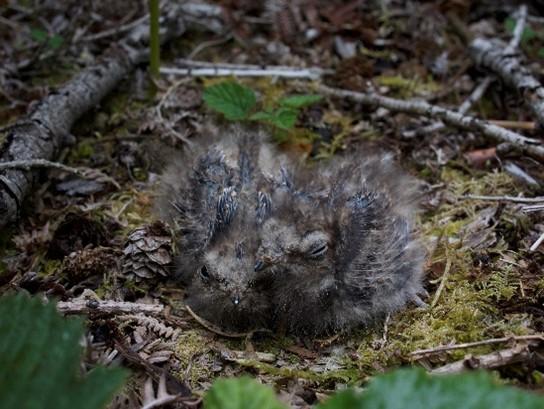
Nightjar chicks (J Marshal)
Dartford Warblers, on the other hand, are resident – you can see them right across the Pebblebed Heaths, all year round. This usually shy and skulking bird is much more brazen, during breeding season and can be spotted singing from the tips of gorse or flitting between tufts of heather. They nest on the ground under dense heather or compact gorse. It makes a grassy cup -shaped nest in which lays 3-5 eggs. Listen first for their scratchy call, it’s often the only way you’d know they were there.
There are around 200 Dartford Warbler territories across the commons - numbers continue to recover after the cold winter of 2018 caused concerning declines. The Pebblebed Heaths sits at the most northern extent of this charming bird’s range and extended periods of cold weather can lead to severe population declines
Luckily, on a good year, when the weather behaves and there is plentiful food, Darties can lay up to three clutches of eggs in a season.
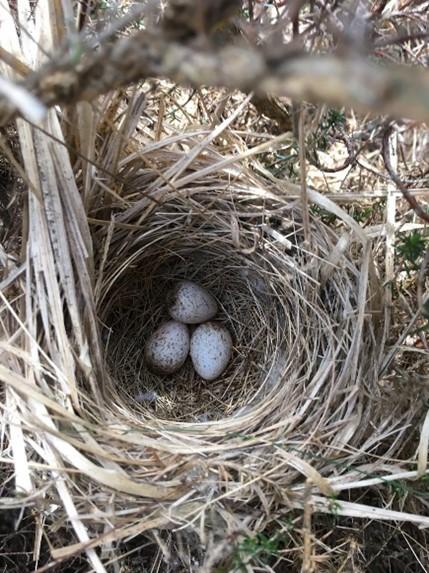
Dartford Warbler nest – Pebblebed NNR (J Marshal)
How can you help?
The most important thing that you can do when out walking alone or with a canine companion is to make sure you and your dog stick to the paths. Paws on paths! Birds that nest on or close to the ground, often nest very close to paths and if you’re off adventuring through the scrub you can trample eggs or scare birds off their nests, leaving eggs and/or chicks exposed to cold and predators. Both these species are on the UK Amber list and are Schedule 1 birds on the Wildlife and Countryside Act 1981 (protected against disturbance), so a little extra regard could go a long way to supporting populations.
Thanks for being considerate when visiting, and for giving wildlife the space it needs to survive.
Welcome aboard, Claire!
Hello everyone! I’m Claire, your new Wildlife Warden, and I’m absolutely thrilled to be joining the team. I wanted to take this opportunity to introduce myself, share a bit about my background, and let you know what I’m looking forward to in this role.
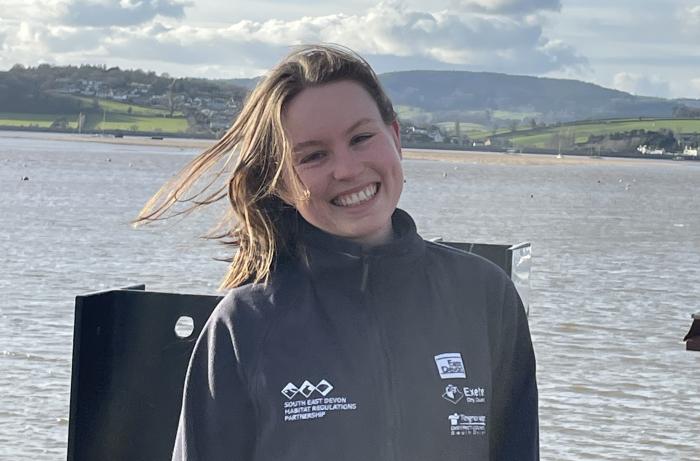
Claire Spence, Wildlife Warden
What attracted me to become a Wildlife Warden?
Being a Wildlife Warden gives me the opportunity to be outside and interacting with the public on a daily basis. I love chatting with people and sharing my passion for wildlife and conservation. Also, being on the ground really allows me to see the impact of my work right in front of me, which I find very encouraging.
A little about me
Well, I come from quite an international background. I was born in Canada, raised in Switzerland, and studied in the UK. My passion for nature started quite young, sparked by the love for the ocean. This drew me to study Zoology by the sea in Cornwall, at the University of Exeter. I went on to complete my Master’s in Conservation Project Management at the University of Kent, where I developed a strong interest in how people’s opinions and beliefs about nature influence conservation efforts, ultimately drawing me to this role.
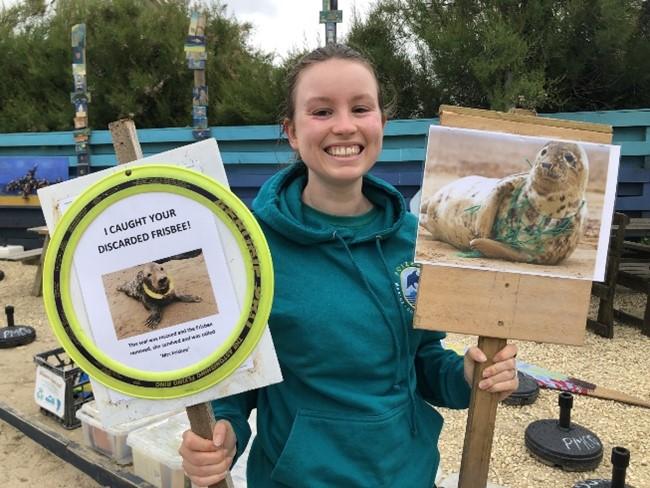
Preparing for a school event at Polzeath Marine Centre (Pic: Vickie Toland)
All throughout my studies, I really delved into volunteering. I had the opportunity to work at the Polzeath Marine Centre as a beach ranger, zookeeper at Wildwood Kent and environmental educator with the Cornwall Wildlife Trust. Before starting this role, I worked at a BirdLife nature centre in Switzerland, Naturzentrum Klingnauer Stausee, where my species ID and education skillset flourished.
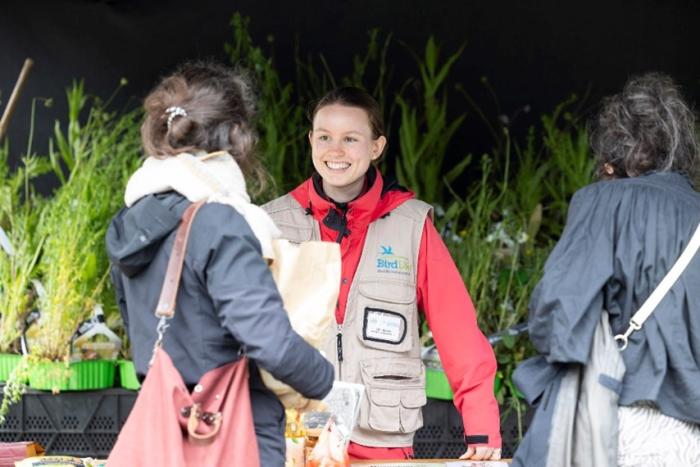
An event at BirdLife Switzerland to green urban spaces (Pic: Severin Bigler)
My goals and ambitions
Well, first I want to get grounded in the position and take the time to really understand the work we do, the reserves and the messages we are delivering. Once I’ve found my footing, I’m excited to deepen our school education programs and expand our offerings. With a background in environmental education, I’m eager to bring my experience to this role.
Challenges in managing the Heaths and how I hope to help
As we move into the summer breeding season, one of our biggest challenges is dogs staying on paths. One method we are addressing this is through the 'Paws on Path’ campaign. Our winter campaign “Bag it and Bin it” was a great success. At our pop-ups we were giving out free doggy goody bags to spread this message and who does not love a free goody bag?!
I’ve found that simply chatting with people and explaining the reasoning behind this campaign in protecting our ground nesting birds can be very effective. Once they understand how to help preserve the nature reserves they love, they’re usually happy to do their part.
What I’m most looking forward to.
I am most looking forward to seeing how the world adapts as the season changes. I am so excited to witness all the spring flowers coming up, especially the bee orchids at Dawlish Warren. Additionally, I’m excited to get to know our partners, collaborate with them, and make a real difference on the ground.
I’m so excited to be part of this team, and I look forward to meeting many of you out on the heaths or at the beach this summer. If you see me around, please don’t hesitate to say hello!
What’s in a name?
Surely one of the main aims of successful communication is to convey information that is sufficiently clear for everyone to understand, no matter what age, background, or education they have come from. It is something that the team at South East Devon Wildlife work hard to achieve through a variety of different ways including social media, signage, education events, guided walks, radio/tv appearances, and one to one interactions on site.
We tend to believe that scientific or Latin names are confusing and difficult to remember, and that common names for species are better. However we forget that there are many common names for the same species which are not known to everyone, even within the same country. In fact, some common names actually relate to different species for instance ‘daddy long legs’ can refer to a spider with a very small body and very long legs, as well as a fly with long legs and wings. Not to mention that each country has its own set of common names for species. Perhaps Latin/scientific names are clearer, but where did they come from?
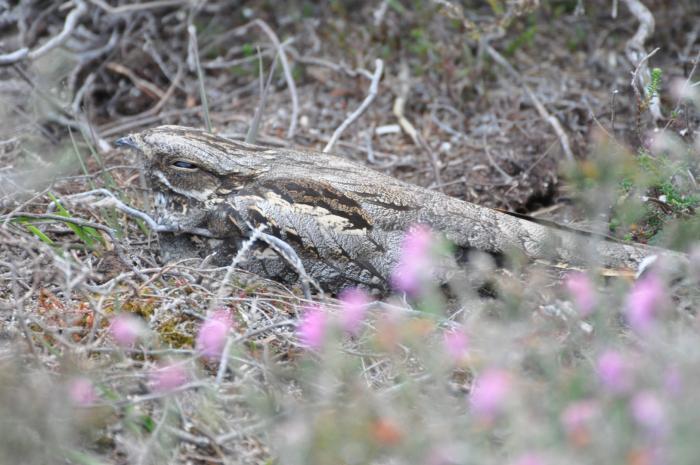
Nightjar "Caprimulgus europaeus" or "European Goat sucker"!
Botanical naming began as early as 370 BC with plant names being mainly written in Greek. From Medieval times, monks (who primarily the only people who could read and write) took these Greek writings and translated them into Latin. Therefore, Latin became the universal scientific language throughout Europe. The purpose of these writings was mainly medicinal as opposed to plant science, and names were often very long, descriptive and difficult to remember, such as Plantago foliis ovato-lanceolatis pubescentibus, spica cylindrica, scapo tereti, meaning "plantain with pubescent ovate-lanceolate leaves, a cylindrical spike and a terete scape”!
In 1753, a Swedish botanist named Linnaeus published a book called Species Plantarum, and in 1758 a book called Systema naturae in which he re-named approximately 12,000 species of plants and animals.
Linnaeus used the binomial naming system, where each species has two names, consisting of a single-word genus name, which identifies the genus to which the species belongs e.g. Canis which means dog, and a single-word specific epithet or "trivial name"; such as lupus which means wolf. Linnaeus then re-named all other species which looked like wolves, ‘Canis’ including coyote, dingo and golden jackal, with a different trivial name to describe the species.
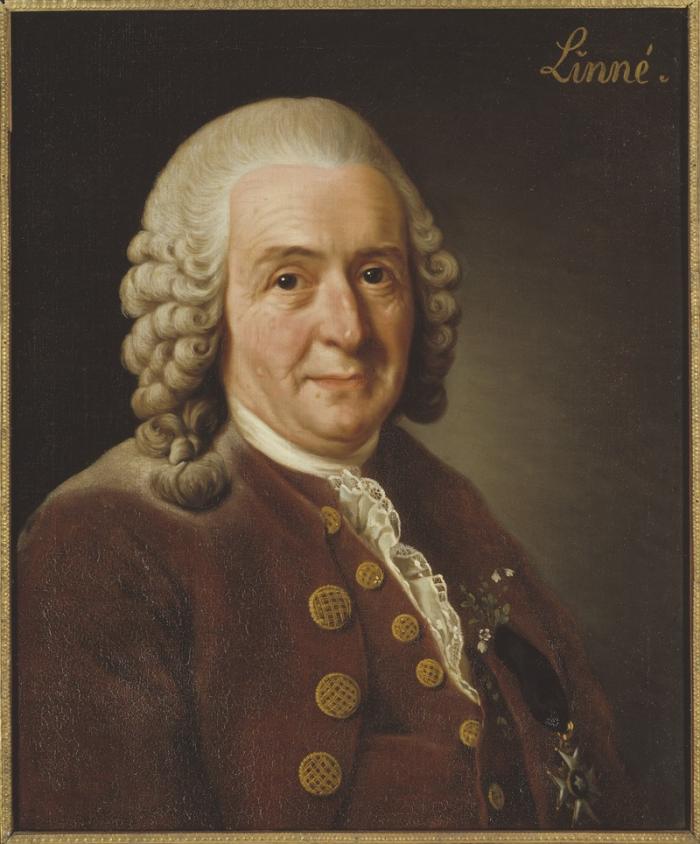
Carl Linnaeus (von Linne), by Alexander Roslin
Clearly since the 18th century, many more species have been discovered, and names have been changed as scientists discover more about flora and fauna thought to be related to each other, which actually are separate species/genus. However, the 2-word naming system has persevered. as a succinct, relatively stable and verifiable method of classifying species that can be used and understood throughout the world.
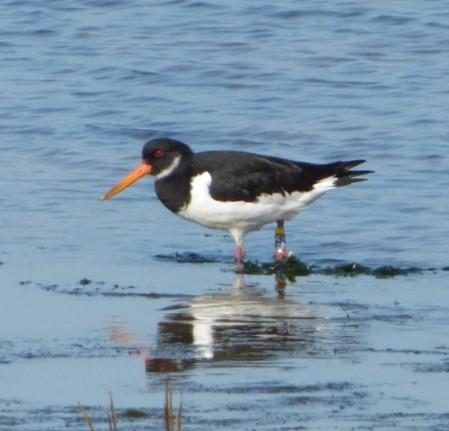
Oystercatcher, Haematopus ostralegus. Haemotopus meaning ‘blood red legs’ and ostralegus meaning ‘oyster gatherer’
Deep Underground
Whilst we’re not expecting to see silver studded blue butterflies in flight at the Pebblebed Heaths until around mid-May to June, an extraordinary relationship is currently happening deep underground.
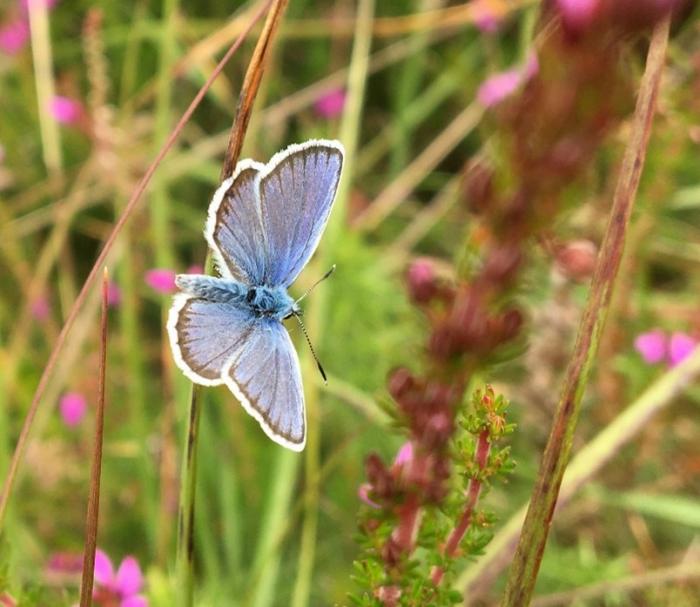
Silver-studded blue butterfly
Female Silver-studded blues will only lay their eggs where they detect ant activity. The caterpillars of the silver studded blue butterfly live underground in black ant nests. They attract the ants by producing large quantities of sugars and amino acids that the ants feed on, they then carry them into their nest for an easy source of food. However, this relationship isn’t all one way, the caterpillars benefit as the ants clean them which helps to avoid disease.
The ants even escort the caterpillars outside at dusk so that they can feed on heather, gorse and birds foot trefoil, and protect them from predators such as other species of ants and even wasps! The ants allow the caterpillar to pupate in the chambers and corridors of the nest where it continues to feed them, and then the ants accompany the emerging butterflies up to the surface, they even stay with it and protect it, whilst it gets ready to fly.
A real example of two species relying on each other for survival!
A well-travelled visitor
The black tailed godwit is something of a success story as one of the few species re-established in the UK as a breeding bird. There were fewer than four breeding pairs recorded but after an absence of more than a century, in the 1930’s they returned and were recorded breeding by 1952. Over time and thanks to conservation efforts, both the breeding and over wintering populations have risen.
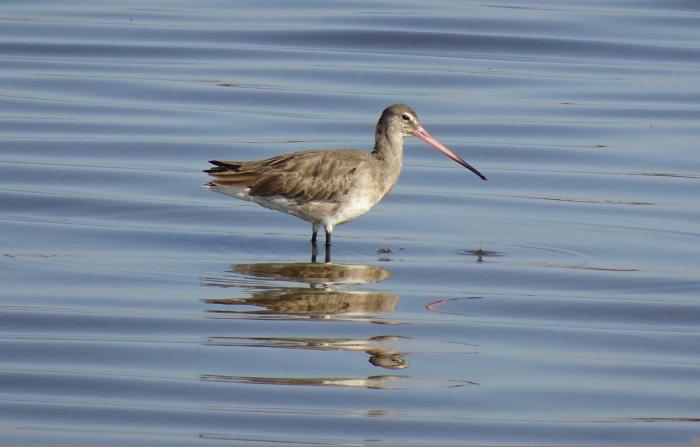
Black-tailed godwit
Larger numbers of birds are encountered in the more regularly in spring and autumn before the birds move north from their overwintering grounds around the Exe Estuary to their breeding grounds. These are mainly in Iceland but some head south to Portugal and onto West Africa. Ringing has shown that one bird did a non-stop whopping 13,560km over 11 days!
Project Godwit is creating migration map where individuals are ringed and then can be recorded where they are seen, the maps shows black tailed godwits seen as far south as Mauritania and Senegal!