
Spring Moments, Summer Plans, and Wild Encounters
Welcome to the latest edition of Shores, Heaths and Dunes - the newsletter of South East Devon Wildlife. With the summer solstice upon us, what more perfect time to look back over past months and to reflect and be grateful for the wildlife wonders this spring has delivered?
As I sit down to write this this evening, swifts are screaming through the expanse of airy blue above my garden. They are one of my favourite birds - not just because their presence is a sure-fire indicator that another firm favourite, the nightjar, will have returned to our heaths for the breeding season - but in their own right; because their joyous, carefree flight embodies all that is wild and free. The screaming, by the way, is almost certainly a war cry against the restraint of gravity. An effective one, if their aerial dynamics are anything to go by. Gravity; need not apply.
Back in March, our team attended the Devon Local Nature Partnership conference and I was lucky enough to meet Jerry Horn, founder of Devon Swift Project, and talk to him about the amazing work he’s been doing locally to support this red-list species. Sadly, in line with the plight of much of our wildlife, swift numbers declined by 60% between 1995 and 2020.
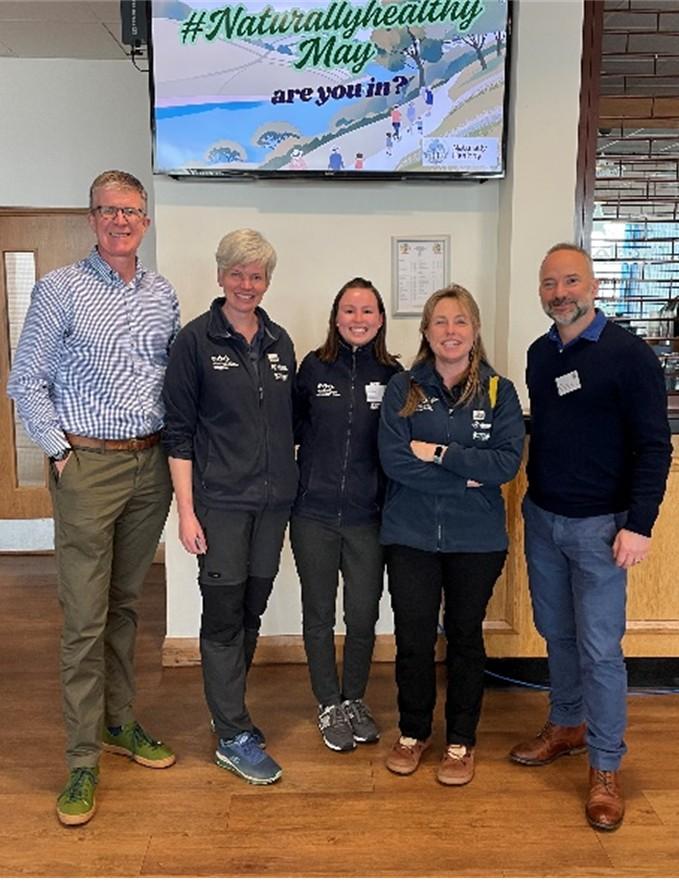
Most of the mitigation team at the Devon Local Nature Partnership conference.
If you haven’t heard of the project, do click the link above and learn more. Thankfully, you don’t have to take my word for it being worthwhile - Jerry went on to win the Wild About Devon - Outstanding Individual Award for his incredible work installing more than 1200 swift boxes across the county.
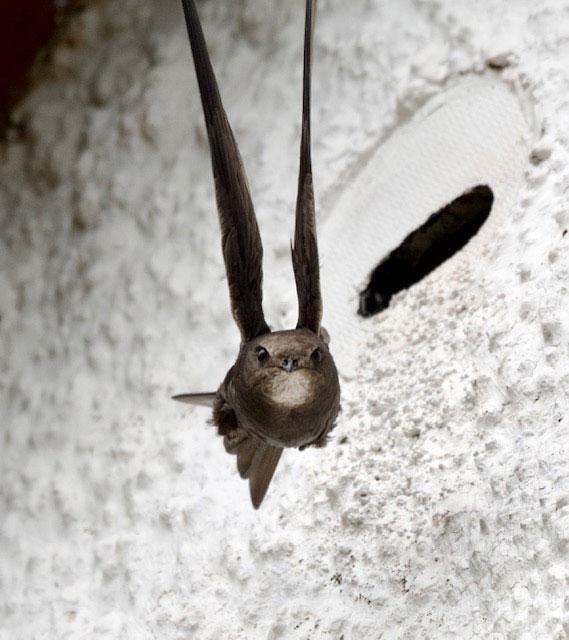
Swift emerging from a "Swift brick". Photo: Jerry Horn.
Also in March, Claire & Sama visited Marpool Primary, Exmouth to give a lesson on local nature reserves and the special species they support to the Year 4s. What a joyful experience and as always, we were endeared to find how much the children already knew about wildlife! Continuing on the environmental education theme, we are now partnering with the Exe Estuary Management Partnership to deliver school sessions at Exmouth Wildlife Refuge over the summer – giving visiting school groups the opportunity to discover more about the estuary, its marine invertebrates and the fantastic bird life they support. If you are affiliated with a school and would like to come on a field trip with us, get in touch, we’d love to hear from you!
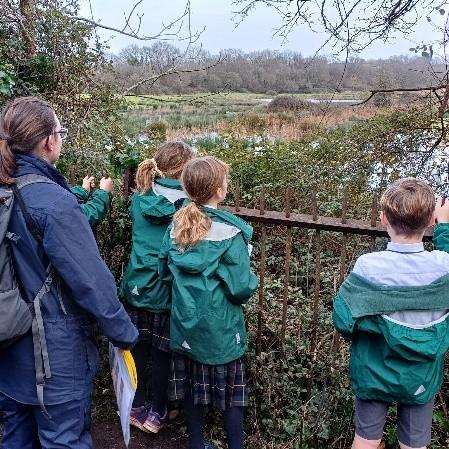
Where the wild things are - a school session outdoors in nature.
Recent downpours aside, I don’t think its news to anybody that we are experiencing a particularly balmy spring here in the UK. The driest in over a century and the warmest on record. The prolonged dry, sunny weather in March and early April had us all concerned about the potential of wildfire – April (counterintuitively), is our most risky time. Dormant winter vegetation has yet to begin growing and drawing water, it’s tinder dry and in early hot weather, very flammable. As news stories rolled in from Dartmoor, Dorset and beyond, we held our breath. I know I’m preaching to the converted here, but please never have a BBQ or campfire anywhere on the Pebblebed NNR or at Dawlish Warren. Both these sites host ground nesting red-list bird species, and Dawlish Warren is one of only two sites in Devon that host Sand Lizard. Just pack a picnic and enjoy that sandy sandwich.

No BBQ's or fires anywhere at Dawlish Warren.
Late April saw our earliest ever reporting of nightjar during a survey on Withycombe Raleigh Common – welcome back ‘goatsuckers’! Nightjar are one of our key species on the Pebblebed Heaths NNR, do check our Warden Claire’s article further down to find why this bird is steeped in mystery.
With Warden Claire now fully certified to use our patrol boat and VHF licenced, May found the team focusing on river patrols - helping water users understand how to give our coastal wildlife the space to rest and feed undisturbed. The Exe Estuary Special Protection Area stretches from the swing bridge at Countess Wear all the way to the sea – it’s great to be back out on the water at this busy time of year guiding responsible behaviour. A huge thanks to the volunteer team that helped support this.
June sees a ramp up in planning for the summer festival season, always a great opportunity to talk to as many of you as possible about our fantastic local heritage and the work we do to support it. Do come and find us at Exmouth Festival, in Manor Gardens, on the weekend of July 12 & 13 and *Save the Date* for probably my most favourite week of the year Heath Week 2025 - running from Saturday 26 July to Friday 1 August.
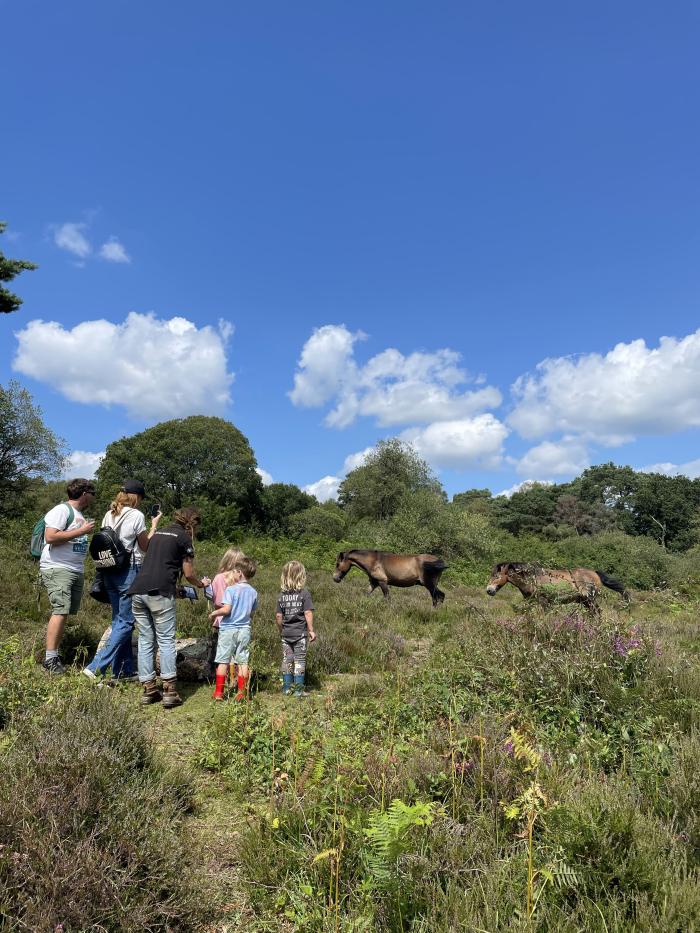
Heathweek - you're invited!
If you haven’t heard of Heath Week, it’s an annual event celebrating the East Devon Pebblebed Heath NNR and the wildlife it supports. A partnership between South East Devon Wildlife, RSPB, Devon Wildlife Trust and the Pebblebed Heaths Conservation Trust – ranger and engagement teams come together to provide a week’s worth of free (or as close as we can get to it!) activities, open to everyone. If you’ve ever fancied pond dipping at Bystock nature reserve or catching a Nightjar walk at RSPB Aylesbeare, now is your chance! Bystock Discovery Day is on Tuesday 29 July and we’re busy organising crafts, a wildlife trail, a moth trap and more! Do pop along 11am-4pm. Bookings will be going live in the next week – keep a keen eye on our social media or hop along to the Pebblebed Heaths event page for more info.
For now, stay well fellow nature enthusiasts and we hope to see you at a pop-up soon!
Warden Sama & the South East Devon Wildlife team
Wild Wonders of Summer: What to Spot This Month
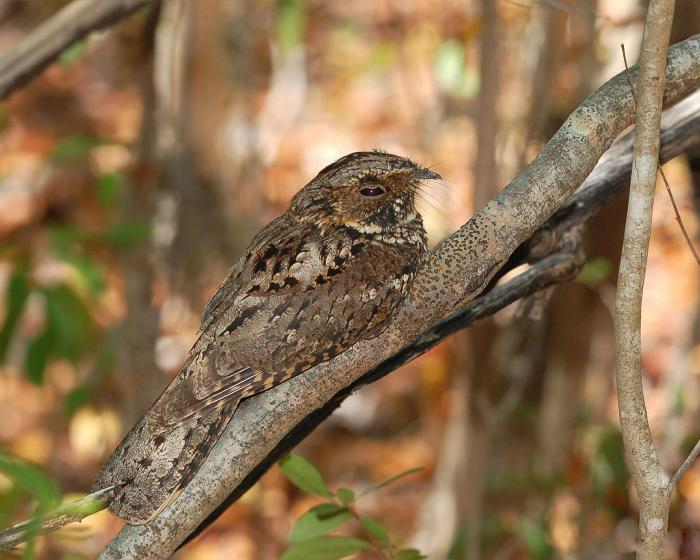
Nightjar.
Keep an eye (and ear) out for Nightjars this month—these elusive, nocturnal birds are best spotted at dusk and dawn as they hunt in near silence. With their pointed wings, long tails, and grey-brown, mottled plumage they are perfectly camouflaged during the day. Nightjars arrive late in spring from the scrub grasslands of the Democratic Republic of Congo, and their presence is often first revealed by the male's distinctive churring song. Steeped in myth, including a bizarre legend about stealing milk from goats, Nightjars add a touch of the supernatural to summer evenings.
Emperor Dragonfly
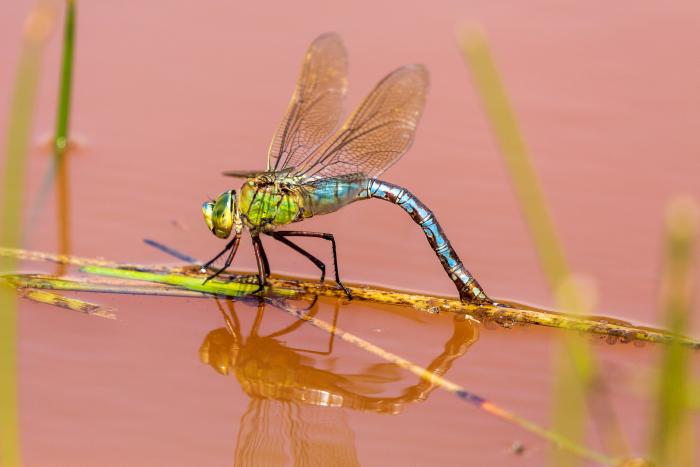
Emperor Dragonfly (Malcom Jarvis).
Look out for the impressive Emperor Dragonfly, one of Europe’s largest dragonfly species, flying between June and August. These striking insects patrol high above the water, hunting other flying insects like butterflies and even fellow dragonflies—often devouring their prey mid-air. Males are pale blue with a vivid green thorax and a black stripe down their body, while females are a duller greeny-blue; both have distinctive blue-green eyes. Their size and colour make them easy to spot, especially at Bystock Pools, a great place to catch a glimpse of this aerial predator in action.
Cinnabar Moth
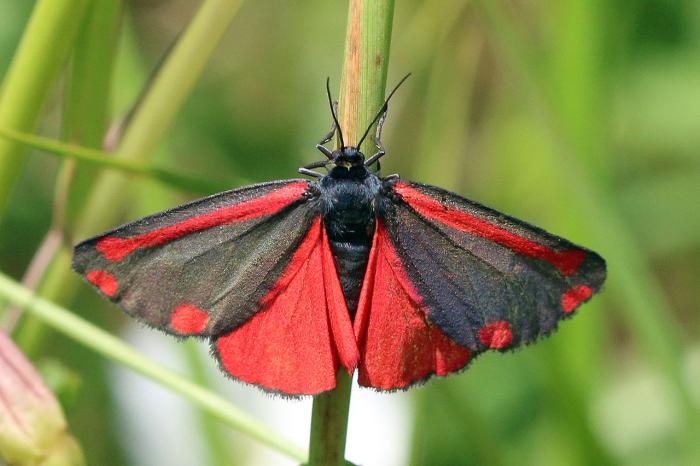
Cinnibar moth.
The Cinnabar Moth is a vibrant, eye-catching insect you might spot flying during the day or night. With its black wings marked by bold red stripes and spots, it's often mistaken for a butterfly. Its caterpillars—bright yellow with black stripes—are commonly found on ragwort, which they feed on to become poisonous to predators. After spending the winter as cocoons in the soil, the adult moths emerge in summer. You can tell them apart from similar species like burnet moths by their broader wings and distinctive red bars instead of spots.
Heath Spotted-orchid
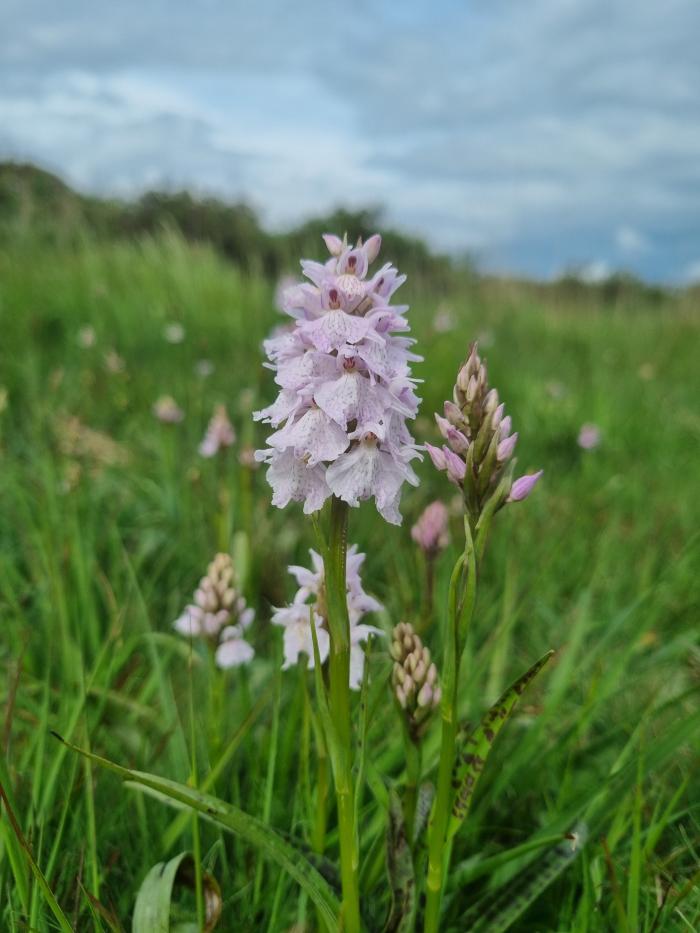
Heath Spotted-orchid.
The Heath Spotted-Orchid is a beautiful wildflower found in heaths, marshes, bogs, and damp grasslands. Blooming between June and August, its delicate flowers range from white and pale pink to soft purple, each marked with intricate darker streaks and loops. Its pointed green leaves are speckled with round purple blotches, helping to distinguish it from the similar Common Spotted-Orchid, which has broader leaves with wider markings and more deeply lobed flowers. Its name, Dactylorhiza maculata, comes from the Greek word daktylos (finger) and rhiza (root), referring to its finger-like tubers, while maculata means spotted—an ode to its beautifully stained leaves.
When myths take flight - the folklore of the Nightjar
Have you ever wondered about the beliefs and myths behind nightjars?
Nightjars and their relatives in the family Caprimulgidae, comprise some 98 species. Here on the Pebblebed Heaths we have the European nightjar, Caprimulgus europaeus, however true nightjars can be found worldwide (except for in New Zealand and some Oceania islands) so the beliefs and myths behind this family are far reaching.
Nightjars were often believed to be helpers of the devil. The story goes: as they flew around at night, nightjars would suck goat’s milk, poisoning them, causing their udders to waste away, making them go blind or die! These myths were common among many European countries with records dating them as far back as 80 AD. One record is from Gaius Plinius Secundus, better known as Pliny the Elder, a Roman scholar born in 23 AD. He was famous for writing, “Historia naturalis,” which contained 37 volumes of knowledge including the belief of nightjars sucking goat’s milk. These beliefs also impacted their Latin name, Caprimulgus, meaning “goat-milking bird” (capra meaning goat and mulgere meaning to milk), despite Carl Linnaeus knowing the true reason these birds were found near livestock.
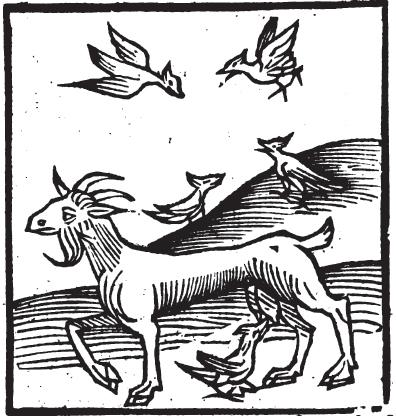
Goatsuckers (J.Meydenbach, 1491).
Yes, the cat has already been let out of the bag. Today we know that nightjars are attracted to livestock but not for the reason these myths alluded to. Nightjars are attracted to the large number of insects residing there. At dawn and dusk, nightjars can be seen hunting for flying insects, such as moths, flies and beetles. The European Nightjar needs to collect enough food for their brood during the short time they breed here for the young to build up enough strength to survive the migration back to Africa. They are usually one of the last species to arrive for breeding season, coming in late April and May, with most travelling from the Democratic Republic of Congo.
They breed on heathland, moorland, woodland clearings and recently felled conifer plantations, many of which are abundant on the Pebblebed Heaths. Based on surveys from last year, collected by the Pebblebed Heaths Conservation Trust, there are 90 to 100 nightjar breeding territories on the Pebblebed Heaths (NNR). Nightjars have a high fidelity to their breeding sites, meaning they often come back each year to the same location to breed. Females lay their eggs on secluded patches of bare ground. They take 18 days to hatch and then another 18 days until the young leave the nest. Each pair will normally have 2 broods per year. By late August and September, they are ready to leave the UK, heading back to their African wintering grounds (For more info on migration).
So now we know that the nightjar are not causing the diseases seen among livestock, hence was this also a myth? No, it was not. Shepherds correctly observed their livestock, especially in warm climates, suffering from blindness, reduced milk production or death at a young age. Today, scientists know that flies, such as Oestrus ovis, lay their eggs in livestock’s eyes which may damage the animal’s vision. Additionally, the adult flies often carry bacteria and viruses which get transmitted to the livestock via their nose, eyes or mouth. Either method of causing blindness will cause the animal to feed less and thus reduce/ stop their milk production. Moreover, worm infections also lead to a reduction in body weight. So, despite the nightjar getting the blame for centuries for causing diseases among livestock, it was really their prey at fault.
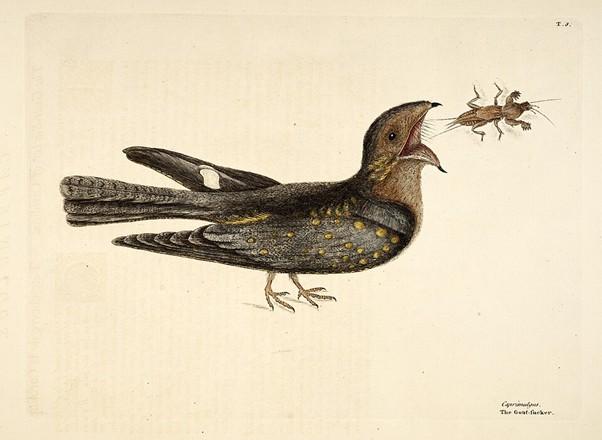
The Goatsucker (M. Catesby, 1754).
You may ask, but as nightjar spend most of the year in Africa, did people there believe in the same myths? The answer would be that they have different myths, which are still believed in today. For example, the Akan, Ghana’s largest ethnic group, believe the nightjar have an evil spirt associated with them. They have a saying which goes, “Aye se santrofi anoma. Se wokum no a, ivoafa mmusuo; se wogyae no nso a, wagyae seradee”. This literally translates to “the situation is like the nightjar which when you kill it, you have invited misfortunes for yourself, but when you leave it, you have missed a delicacy,”. This saying is used by elders to teach their youth about difficult situations. It is intended to advise them about being careful when making a decision, however a side effect is that many people will avoid hunting the nightjar.
So, while the European myths were misplaced, the nightjar continues to hold a powerful place in stories across the world. From Roman legends of goat-milking birds to African proverbs warning of misfortune, nightjars have long stirred curiosity and caution. Today, we know they play an important role in our ecosystems, not as bringers of illness, but as skilled insect hunters of the twilight hours. So next time you hear their jarring call over the Pebblebed Heaths, take a moment to appreciate not just the bird, but the rich tapestry of culture and history that follows it through the night.
Warden Claire
Step Up. Stand Out. Volunteer!
In light of the recent National Volunteer Week, we wanted to shine a light on our amazing volunteers and all the work they do for us!
Volunteers are the lifeblood of SED Wildlife. With a small team of just three Wildlife Wardens—one full time and two part time— our dedicated volunteers help us to maintain our high levels of care for our sites and wildlife. Whether it’s covering for occasional staff absences or supporting our day-to-day work, their passion and commitment make a real, lasting difference.
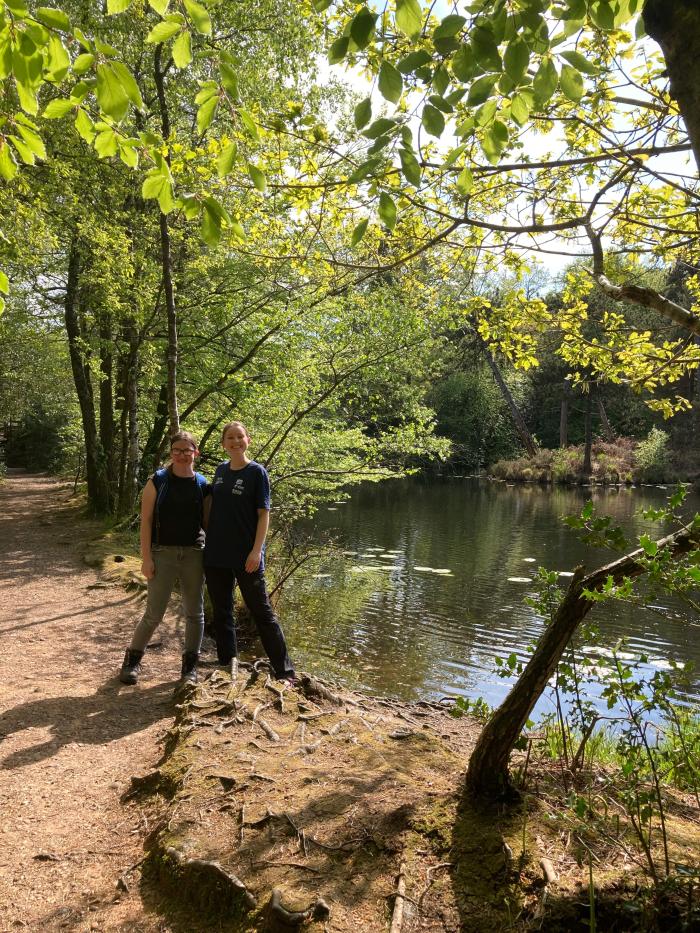
Warden Claire with volunteer Millie.
And it’s not just about giving time—volunteering with us is a chance to connect with nature, learn new skills, meet like-minded people, and be part of something that genuinely matters. If you’ve ever thought about getting involved, now is the perfect time to join our growing team
“I love volunteering with the SED team. It gives me the opportunity to learn from the rangers but also to share my natural history knowledge with them and members of the public. My role is varied from manning the gazebo, walking the Commons, knowledge sharing, mapping walks, assisting with bird counts and I do love to tidy the information boxes! Getting out with the team is so beneficial for my wellbeing and I look forward to my volunteering sessions.”
Clare Carter, Heaths volunteer
As Clare has so excellently put it, our volunteers can get involved in a variety of activities from pop-ups, walking patrols and even piloting our patrol boat (as long as you are qualified, of course!). For pop-ups, we take our gazebo to the Pebblebed Heaths, Dawlish Warren or Exmouth wildlife refuge. We have lots of interesting displays, spotter sheets and games for all ages to engage with. We also talk to the public as they come through the reserves, perhaps reminding them about ground nesting birds, ‘paws on paths’, or letting the public know about live firing. Occasionally we take the gazebo to local events as well such as the Exmouth Festival.
On the other hand, walking patrols take place on both the Pebblebed heaths and Dawlish Warren. We spend a couple hours walking around speaking to people about the site, the wildlife you might see, and any specific issues. For example, when we patrol the Heaths we like to hand out our Pebblebed Heath codes – Pebblebed Dog Code | South East Devon Wildlife and explain the importance of ground nesting bird species or at Dawlish warren, we hand out the Dawlish Warren Code.
Our boat volunteers hold a Level 2 Powerboat licence, allowing them to join us patrolling the Exe Estuary, where we monitor both wildlife and local disturbance.
“As a Volunteer Coastguard Rescue Officer, I’ve seen firsthand the powerful connection between people, coastlines, and the natural world—and the risks that come with their misuse. That’s why I’m proud to support South East Devon Wildlife’s mission to protect and enhance the internationally important habitats of the Exe Estuary, Dawlish Warren, and the East Devon Pebblebed Heaths.
My role as a Patrol Boat driver complements this work perfectly, allowing me to actively engage with visitors, support conservation measures, and help safeguard sensitive wildlife areas from disturbance. It’s incredibly rewarding to be part of a team that not only protects our rich natural heritage but also encourages responsible enjoyment of it. Supporting South East Devon Wildlife isn’t just a passion—it’s a natural extension of the values I uphold every time I go on duty”
Alan Crocker, Boat Volunteer

Volunteer Alan helps with a Boat patrol on the Exe Estuary.
Volunteering does not stop there. We also host work placement students, such as Mille Critchley who was doing a Level 2 Diploma in Countryside and Wildlife Management at Bicton College.
“I became a volunteer to help earn more work experience hours. I really enjoyed going out and volunteering with the rangers. I have learnt from them how to identify different species of flora and fauna. We did fun activities like bird watching at Dawlish Warren and patrolling the heathland. The coolest thing I saw was an adder just sitting on the path while we were walking in Colaton Raleigh Common. I have never seen one before, so this was a really cool experience.”
If volunteering sounds like something you’d be interested in helping us with, we would love to hear from you! We typically work Tuesdays to Fridays 9-5 and on alternate weekends, and welcome regular or occasional volunteers. Feel free to get in contact with us at: [email protected]
Warden Katie
We want to hear from you!

We need to hear from you!
South East Devon Wildlife works to protect our region’s internationally important nature reserves, and we need your help! Your experiences and perspectives are vital in helping enhance how areas are protected and managed for future generations.
If you have recently visited the Pebblebed Heaths National Nature Reserve, explored the Exe Estuary, enjoyed Dawlish Warren, visited Dawlish Countryside Park or have ventured to Ridgetop Park, please take the time to tell us about your visit.

Visited the Exe Estuary or surrounding area recently?
We know these areas are important to those who live in and visit these places, and we want to understand how you use them. Whether you’re a dog walker, an estuary fisher, a watersports fan, or trail-tackling cyclist - a frequent or first-time visitor - your input matters.
By completing the survey, you’ll help to paint a picture of how visitors use and value these landscapes. This understanding will ensure informed decisions are made to improve access, protect wildlife, and enhance visitor experiences in future.

Do you love visiting the East Devon Pebblebed Heaths (Woodbury Common)?
The survey will take around 10-15 minutes to complete and will ask you questions about how you use the space, what a usual visit looks like to you, ask you to map where you went, and share who was in your party.
Complete the survey here: https://bit.ly/SEDW-survey
For more information about this project or if you require a paper copy of the survey, please contact [email protected].
Have you discovered Ridgetop Park?
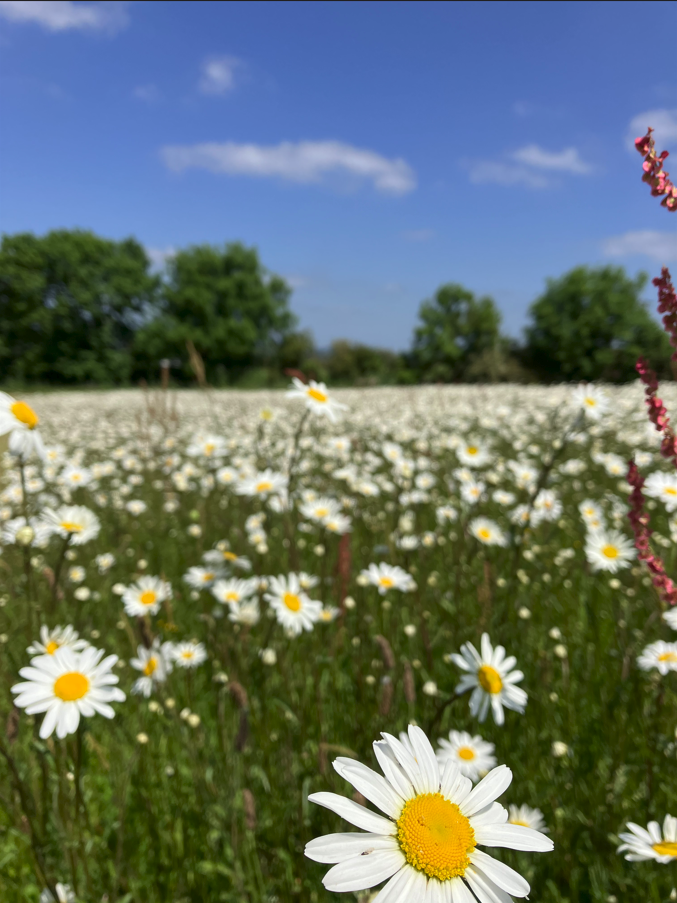
One of the many wildflower patches at Ridgetop (with Moon Daisies).
As its name suggests, Ridgetop Park in Matford, sits on high ground, offering breathtaking panoramic views in every direction. Officially opened in August 2023, this spacious countryside park features a rugged, natural landscape with plenty to explore – perfect for scenic walks, relaxed picnics or giving your dog a good run in the park’s well fenced boundaries.
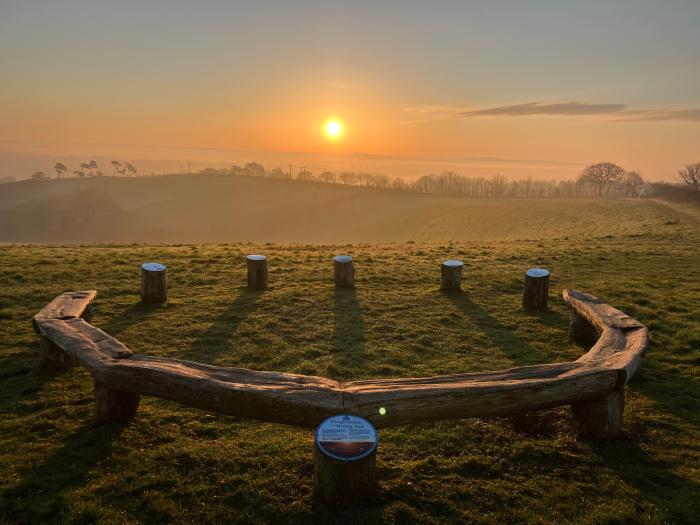
Spring equinox.
There are three key viewpoints onsite. The Sunrise and Sunset Seats are perfectly positioned to showcase the beauty of the Exe Estuary and Haldon Ridge, while the specially designed Skygazing seat provides a tranquil spot to lean back and take in the wonders of the sky.
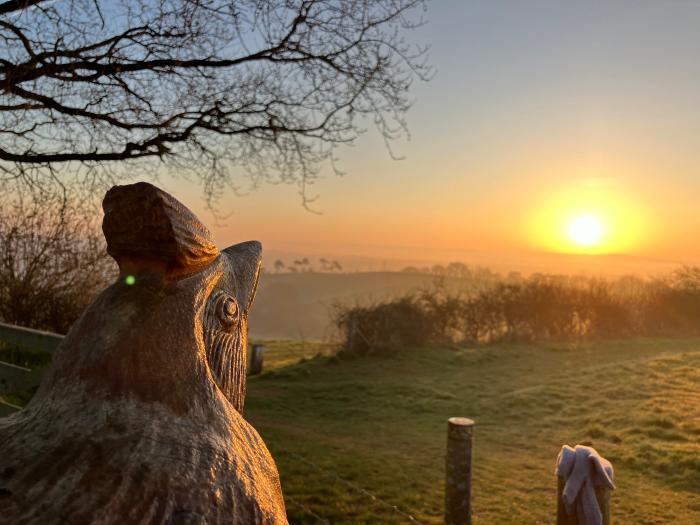
Up with the lark - Spring Equinox at dawn, Ridgetop Park.
Keep an eye out for Kersey and Serge – two carved sheep who have made Ridgetop their home. You’ll find information posts throughout the park, highlighting the area’s rich history, from ancient geology and the Stone, Bronze and Iron Ages, to its Roman, Viking and Norman past, and the Tudor wool industry.
Throughout the year, rangers host regular guided walks and family-friendly events – many of which are free to attend.
There are two small car parks available:
- Trood Lane (What3Words: engage.soup.bond)
- Luxton Road (What3Words: hush.angel.squad).
In May 2025, a new pedestrian path was completed from the Luxton Road car park, providing a more direct route into Ridgetop Park (view map).
"Ridgetop Park is truly a special place with breath taking views and rich wildlife, the new path makes it even easier for the community to discover and enjoy everything it has to offer"
The Land Trust
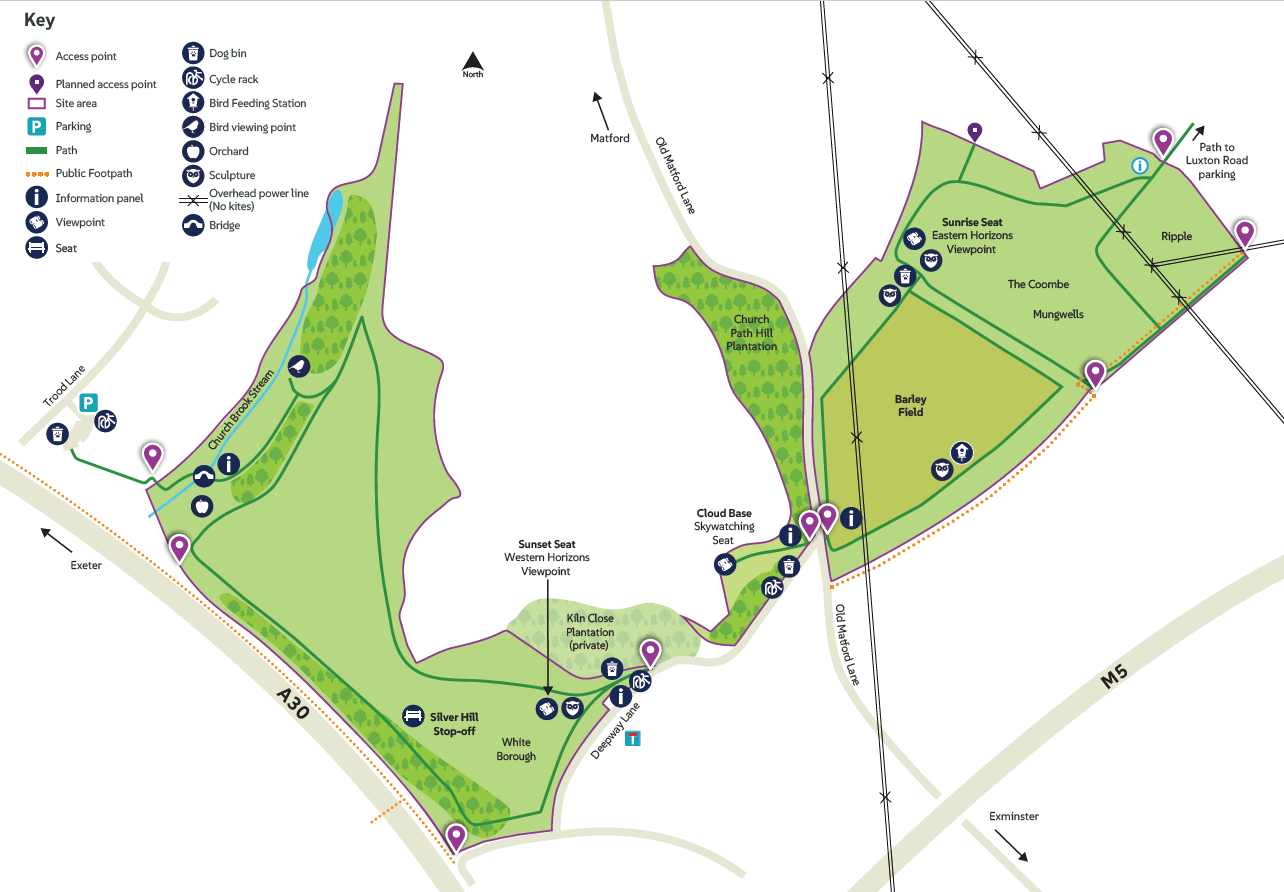
Map of Ridgetop Park.
Ridgetop Park is a Suitable Alternative Natural Green Space (SANGS) helping to reduce visitor pressure on nearby internationally protected nature sites, such as the Exe Estuary. It forms part of a wider conservation strategy delivered by the South East Devon Habitat Regulations Partnership (between East Devon District Council, Exeter City Council and Teignbridge District Council).
Looking ahead, the park will grow further with the restoration of a neighbouring landfill site. This second phase will add another 30 acres of natural space, including grassy meadows with mown paths, a hazel copse, and Cuckoo Hill viewpoint.
Funding was secured by Devon County Council via the Government’s Housing Infrastructure Fund. Teignbridge District Council have led on delivery of the park on behalf of the South East Devon Habitat Regulations Partnership. The park is maintained through collaborative working with The Land Trust, a not-for-profit charity, who are now responsible for the long-term maintenance of the site. To find out more, visit Teignbridge District Council’s website.
Keep up-to-date by signing up to Teignbridge District Council’s newsletter.
Shaped by Nature, People and Time: the East Devon Pebblebed Heaths National Nature Reserve (NNR)
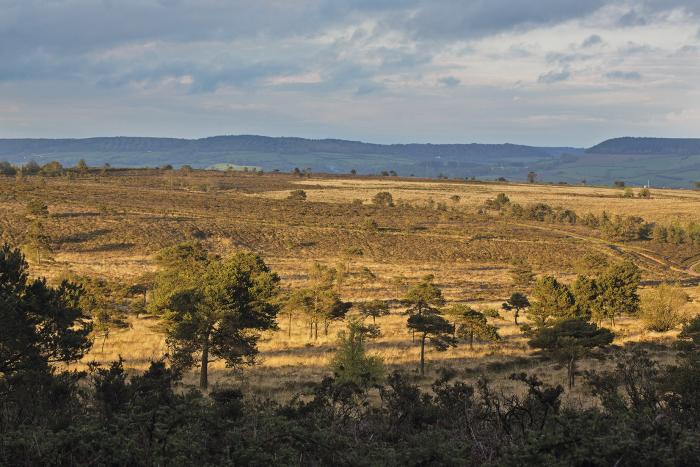
The heaths.
Pollen studies show that before 6,000 BC the majority of heathland areas were covered with trees, however as people started to clear the forest for pasture, probably by burning, they would have exposed the soil to the weather. This led to the degradation of the topsoil which reduced the soils natural fertility and eventually resulted in the development of heathland on nutrient poor soils. Up until the beginning of the 20th century, heathland was part of the farming system with turves (squares of heather) being burnt for fuel, and heather being used for grazing and low-grade thatch. A special use for heathland was for rabbits. A landowner could put rabbits on the commons without infringing the grazing rights of the commoners, meaning that they also received a payment for owning the land. The Warren on the Pebblebed Heaths may have been used for this.
From the 17th century, agricultural improvements made it possible to cultivate all but the most difficult soils, and many heathlands were lost to agricultural pasture. Grassland is spread with a fertiliser such as manure to improve the soil fertility and thereby the nutrition of the grass for cattle.
The practice of keeping rabbits, burning turves and grazing heather, as well as commoners being allowed to use heaths was largely stopped by the Enclosure Act. Heathland stopped having a value to landowners and was largely seen as a ‘dreary and desolate wastes, and the resort of highwaymen’.
Tree planting on heath became an official policy when the Forestry Commission was formed in 1919 and this together with agricultural improvement to improve the soil fertility, resulted in massive losses in heathland throughout the UK. In the last 200 years or so, 80% of lowland heath has been lost. Nowadays, the majority of heaths are lost due to not being managed sufficiently, as without grazing and cutting, the nutrients in the soil develop and birch and pine woodland establish.
We are lucky to still have the largest area of lowland heath in Devon, the Pebblebed Heaths, which is approximately 1400ha and contains about 60km of trails. It is managed by the Pebblebed Heaths Conservation Trust, RSPB and Devon Wildlife Trust using a combination of grazing, cutting and some swaling (burning). This enables a mosaic of scrub, heather and small trees which thrive on areas with lower nutrients, together with wetter areas, open ground and small pools to be maintained. The variety of habitats in a relatively small area is unusual and means that a wide array of plants and animals can flourish by making use of different habitat niches.
Some plants found on the Pebblebed Heaths compensate for the low nutrients in the soil by unusual means. Carnivorous sundews have glandular tentacles with sticky droplets on their leaves. These catch unwary insects and curl inwards, holding the insect while they gradually absorb the nutrients released.
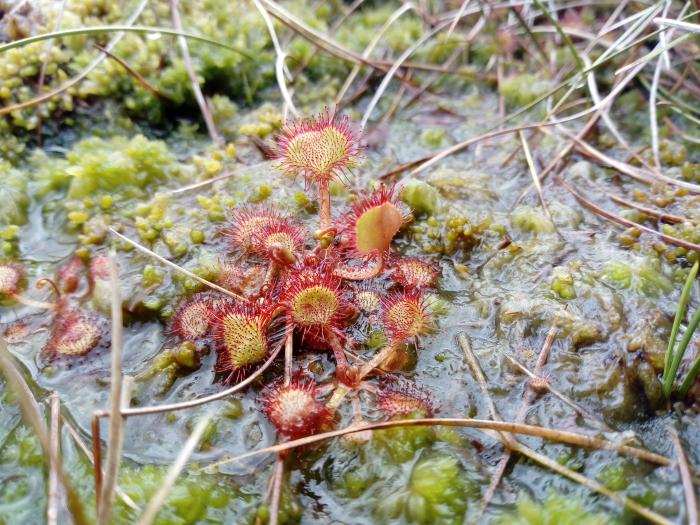
Sundew.
Bell heather has a symbiotic (a close physical association) relationship with fungi that grow inside, and between, some of plant root cells. Bell heather thrives in the presence of the fungi, which pass on essential and scarce nutrients in heathland soils, and the fungi benefits from gaining sugars produced through photosynthesis.
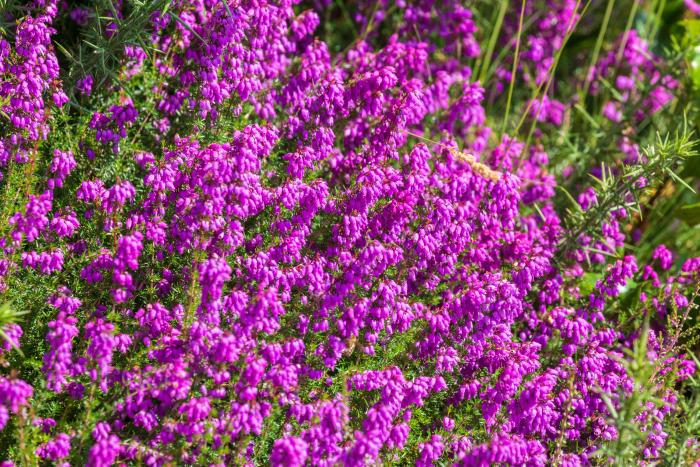
Bell heather (Malcom Jarvis).
The lower nutrients in the soil also mean that no plant gets too large, as there are essentially no fertilisers to improve growth, this is why the grasses on the heaths are generally coarser and brown, not green like we see in the pasture fields surrounding the heaths and a variety of tiny plants flourish. The exception to this is around the car parks where there are nettles and docks which thrive in areas high in nutrients, such as from dog poo. Whilst fertilising the ground sounds like a good thing we now know that the heaths have developed on poor soils and this has resulted in a wide array of unusual plants and animals, only found on heathland habitats.